General health information. Your doctor can help interpret it for your circumstances.
A family member's speech suddenly becomes unclear, then seems normal again. That improvement is not a reason to wait. Stroke-like symptoms need urgent hospital assessment; this guide also explains the different questions that matter after someone has left hospital.
Stroke symptoms and transient ischaemic attack (TIA)
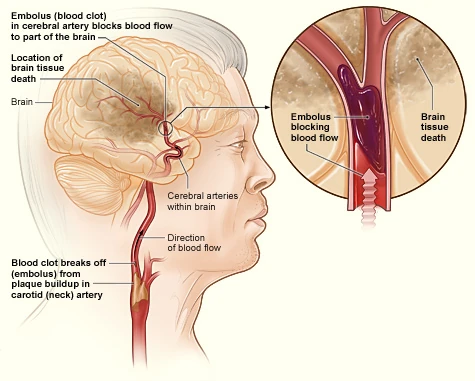
A stroke damages part of the brain when its blood supply is interrupted. An ischaemic stroke involves a blocked artery; a haemorrhagic stroke involves bleeding. These require different treatment, so symptoms cannot determine the stroke type without medical assessment and brain imaging. [1] [2]
Stroke symptoms usually appear suddenly: an uneven smile, weakness or numbness on one side, slurred speech or difficulty understanding language. Sudden vision loss, loss of balance or an unusually severe headache can also occur. Symptoms may be noticed on waking. Do not wait for every warning sign to appear. [1]
Symptoms that disappear may be a transient ischaemic attack, or TIA. This still needs urgent hospital assessment. At the start, it is not possible to know whether symptoms will pass or whether a stroke has occurred. [5]
Why is a brief episode still an emergency?
At the start of an episode, you cannot tell at home whether it will resolve or which type of stroke is responsible. Sudden speech difficulty, one-sided weakness or a drooping face needs an ambulance immediately. Vision loss, marked loss of balance or an unusually severe headache can also be warning signs. Waiting to see whether symptoms last wastes time. [1] [5]
Hospital tests distinguish a blocked vessel from bleeding and assess which urgent treatments are suitable. Do not start blood-thinning medicine yourself or use a routine GP appointment as a substitute for acute assessment. Continue with hospital care if the symptoms improve while you are waiting for help. [2] [4] [5]
What should the first follow-up after discharge cover?
Bring the discharge summary and the current medicine list, particularly if several teams are involved. Ask what type of stroke occurred, what cause was identified and which treatments reduce recurrence. An antiplatelet and an anticoagulant are not interchangeable; the choice depends on the clinical circumstances, including whether an irregular heartbeat contributed. [2]
Give daily functioning as much attention as the prescription. Talk about walking, communication, personal care and the help available at home. Rehabilitation goals should be meaningful to the person recovering and realistic for the caregiver. If appointments or home care are difficult to manage, ask the team what support and community services can be explored. [3]
A post-stroke follow-up checklist
Use this for planned care after discharge, not when new stroke symptoms occur.
| Bring or discuss | Purpose |
|---|---|
| Discharge summary and medicine list | Clarify the stroke type, cause and ongoing treatment. [2] |
| Blood pressure, diabetes and cholesterol follow-up | Address relevant factors for another stroke. [1] |
| Daily-living goals and caregiving difficulties | Shape rehabilitation and practical support. [3] |
New sudden neurological symptoms need an emergency ambulance, even in someone already recovering from a stroke.
Emergency stroke assessment and treatment
Hospital assessment may include a CT or MRI brain scan, blood tests, heart-rhythm monitoring and tests of the heart or blood vessels. These help identify the stroke type and likely cause, including conditions such as an irregular heartbeat. [2]
Some people with ischaemic stroke may be eligible for clot-dissolving medicine or a procedure to remove a clot. Bleeding strokes may need different medicines or procedures. Eligibility depends on the type of stroke and clinical assessment; these are urgent treatments rather than options to arrange later. [4]
Follow-up and preventing another stroke
After an ischaemic stroke, an antiplatelet medicine or, for certain causes such as atrial fibrillation, an anticoagulant may be prescribed. These are not interchangeable. Your team also reviews blood pressure, cholesterol and other risk factors. Do not start blood-thinning medicines yourself for suspected stroke symptoms. [2]
Keep taking prescribed medicines and attend reviews even when symptoms improve. Managing diabetes, high blood pressure and cholesterol, stopping smoking and building suitable activity into daily life are parts of reducing the risk of another stroke. [1]
Stroke rehabilitation and caregiver support
Rehabilitation aims to improve daily function and reduce complications. It may continue as inpatient or outpatient therapy, depending on your needs. You and your family should take part in planning. Ask about practical support and community services if daily activities or caregiving become difficult. [3]
When to seek help
Use FAST: Face drooping, Arm weakness, Speech difficulty means Time to call an emergency ambulance immediately. Even one sign needs action. Continue with hospital assessment even if symptoms improve while waiting for help. [1] [5]
For a life-threatening emergency in Singapore, call 995. MOH emergency information.
Frequently asked questions
Should I wait if the symptoms last only a few minutes?
No. A transient ischaemic attack can cause symptoms that disappear, but it still needs urgent assessment. At the beginning you cannot safely distinguish it from a stroke. Call an ambulance when stroke symptoms start and continue with hospital assessment even if they improve. [1] [5]
Will everyone receive the same stroke medicine?
No. A blocked artery and bleeding in the brain require different treatment. Longer-term medicine also depends on the cause and other health factors. Brain imaging and the hospital assessment guide those choices. Do not copy another person's treatment or self-start aspirin for suspected stroke symptoms. [2] [4]
Does care finish when I leave hospital?
No. Many people need continuing rehabilitation, monitoring and treatment to reduce the risk of another stroke. The plan may involve several professionals and the caregiver. Ask who coordinates follow-up, which medicines continue and what practical goals and support should be reviewed next. [1] [2] [3]
What can I ask at my appointment?
- What caused my stroke, and which treatments reduce my risk of another one?
- What rehabilitation goals, home support and follow-up are appropriate for me?
Sources and evidence
Numbered references connect the information above to these clinical guidelines and patient resources. Access dates are listed with each source.
- Stroke – Symptoms, Prevention & TreatmentNational Neuroscience Institute, Singapore · accessed 19 November 2026
- Stroke: Hospital Stay and Care ExperienceHealthHub, Ministry of Health Singapore · accessed 19 November 2026
- Stroke: Post-stroke CareHealthHub, Ministry of Health Singapore · accessed 19 November 2026
- Treatment for a strokeNHS · accessed 19 November 2026
- Transient ischaemic attack (TIA) – SymptomsNHS · accessed 19 November 2026