
General health information. Your doctor can help interpret it for your circumstances.
You lose another afternoon to a familiar headache, take the medicine you usually reach for, and wonder whether there should be a better plan for next time. Start by recording what the attacks do to your day and how often treatment is needed.
Could my recurring headache be migraine?
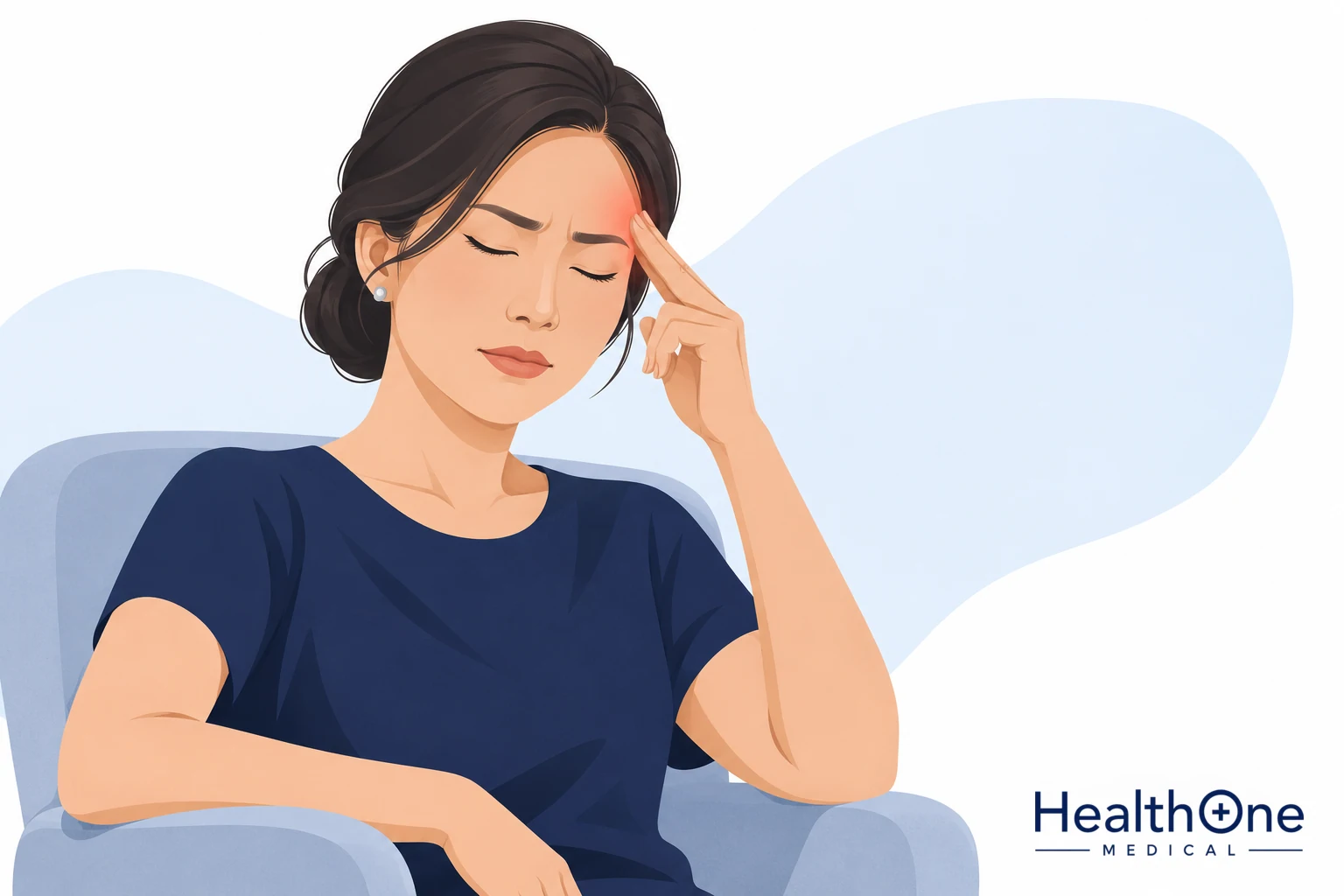
Migraine commonly causes a pounding headache, nausea and sensitivity to light or sound. Movement may make the pain harder to tolerate. An attack can last from several hours to a few days, and tiredness or difficulty concentrating may continue after the head pain eases. [1]
Some people experience aura, such as shimmering lights or tingling that develops gradually and usually settles within an hour. Many people have migraine without aura. New weakness, sudden loss of vision or unfamiliar speech difficulty needs urgent assessment rather than being assumed to be aura. [1] [8]
Will I need a brain scan?
A clinician assesses your symptoms, headache history and examination findings before deciding on investigations. CT or MRI may be needed when a secondary cause is suspected. A scan is not a test that confirms every migraine; the reason for imaging should be clear in your individual situation. [2]
What should I record before a migraine review?
A short diary and a current medicine list can make the appointment more useful.
| What to record | Why it helps |
|---|---|
| Headache days, duration and missed activities | Shows how often symptoms occur and the effect on work or home life. [2] [8] |
| Nausea, light sensitivity and any aura | Helps your doctor understand the headache pattern and changes from usual. [1] |
| Every treatment used and the days you took it | Shows response, side effects and whether frequent medicine use needs review. [7] [6] |
| Sleep, meals and possible triggers | Helps identify patterns without assuming one trigger explains every attack. [1] |
Bring the actual medicine names or photographs of the labels, including supplements and medicines bought without a prescription.
What can help during a migraine attack?
Depending on your health history, acute treatment may include paracetamol or a non-steroidal anti-inflammatory drug (NSAID), such as ibuprofen or naproxen. Resting in a quiet, dim room, keeping hydrated and a cool compress may help with comfort. Agree when to take your medicine and what to do if the first treatment does not help. [3]
Triptans are another option for a diagnosed migraine attack. They require a suitability check: for example, sumatriptan needs particular caution or may be unsuitable with certain heart or vascular conditions, uncontrolled blood pressure or interacting medicines. An anti-nausea medicine may be included when nausea or vomiting is a problem. [7] [2]
What are CGRP blockers, and where does rimegepant fit?
CGRP stands for calcitonin gene-related peptide. Rimegepant blocks a CGRP receptor and belongs to a group of oral medicines often called gepants. Migraine medicines may be prescribed for attacks, prevention or both, so the intended use and schedule need to be clear. [5] [4]
Singapore’s registered indications for rimegepant include treating an adult migraine attack with or without aura and preventing episodic migraine in adults who have at least four migraine attacks a month. The orally disintegrating tablet dissolves in the mouth. Acute use and preventive use have different schedules; follow the plan prescribed for you. [4]
Possible adverse effects include nausea and abdominal discomfort. Serious allergic reactions can occur, including after a delay. Other medicines can change rimegepant exposure, and liver or kidney disease, pregnancy and breastfeeding need discussion before prescribing. Blood-pressure and circulation problems also matter to the safety review. A CGRP treatment is not automatically suitable for every person. [5] [4]
When should I discuss migraine prevention?
Arrange a review if attacks are becoming frequent, disabling or harder to manage. Preventive treatment aims to reduce the burden of future attacks. Choices can include selected beta blockers, antidepressants, antiseizure medicines or CGRP-targeted treatments. Some people need specialist options, including injections or botulinum toxin for selected chronic migraine cases. [6] [2]
Review the effect on daily life as well as the headache count: missed shifts, cancelled plans and repeated use of attack medicines all belong in the discussion. The choice depends on other medical conditions, side effects, preferences and response. A follow-up plan helps establish whether treatment is useful and whether referral is needed. [8] [6]
What can I change between attacks?
Keep meals and sleep as regular as practical, stay hydrated and notice whether changes in caffeine, stress or your menstrual cycle track with attacks. A headache diary is more useful than assuming that every familiar food or activity is a trigger. Record what happened and look for a repeatable pattern with your doctor. [3] [1]
Count the days you use acute headache medicine, including non-prescription products. Frequent use of some painkillers or triptans can contribute to medication-overuse headache. If you regularly need relief on more than two days a week, seek a treatment review rather than simply increasing how often you take it. [6] [7]
When to seek help
Seek emergency care for an abrupt, extremely severe headache, new weakness or speech difficulty, loss of vision, confusion, a seizure, or headache with fever and a stiff neck. A new or worsening headache after injury also needs urgent assessment. Do not assume these changes are your usual migraine or wait for a routine appointment. [8] [2]
For a life-threatening emergency in Singapore, call 995. MOH emergency information.
Frequently asked questions
Can I have migraine without an aura?
Yes. Aura occurs in only some people with migraine. A history of headache with nausea, light or sound sensitivity and an effect on normal activities can still suggest migraine without aura. Your doctor will assess the overall pattern. [1]
Can I use rimegepant for every headache?
It is a prescription treatment for migraine, not a general treatment for all causes of headache. Whether it is appropriate, and whether it is used during attacks or for prevention, needs an individual prescribing plan. Seek assessment for a new or different headache. [4] [8]
Does a CGRP blocker guarantee relief?
No treatment works for everyone or every attack. Agree what benefit you are looking for, what to do if an attack does not settle and when to review the plan. Side effects, interactions and response all affect the treatment choice. [6] [5]
Why might frequent painkillers make headaches harder to manage?
Frequent use of certain acute headache medicines can contribute to medication-overuse headache. Tell your doctor how many days each month you use them. Ask for a prevention and follow-up plan rather than escalating doses or combining medicines yourself. [6] [7]
What can I ask at my appointment?
- Does my history fit migraine, and is there anything that needs investigation?
- What should I take during an attack, and what is the backup plan?
- Should we consider prevention, and when should I come back to assess the result?
Sources and evidence
Numbered references connect the information above to these clinical guidelines and patient resources. Access dates are listed with each source.
- When is a headache a migraine?SingHealth / National Neuroscience Institute · accessed 21 November 2026
- Headache: types, symptoms and treatmentNational Neuroscience Institute · accessed 21 November 2026
- MigraineHealthHub / National Medication Information workgroup · accessed 21 November 2026
- Rimegepant: registered clinical information in SingaporeNational Drug Formulary · accessed 21 November 2026
- Rimegepant: US prescribing information, including safety and interactionsPfizer · accessed 21 November 2026
- Migraine: treatment and self-careNHS · accessed 21 November 2026
- Sumatriptan: uses and precautionsSingHealth · accessed 21 November 2026
- When to see a doctor for headacheNational Neuroscience Institute · accessed 21 November 2026


