General health information. Your doctor can help interpret it for your circumstances.
The toe pain has settled, but your uric acid result is still high. Do you need the same medicine when you are comfortable? Gout care becomes clearer when you separate treatment for today's inflammation from treatment intended to prevent future crystal build-up.
Gout symptoms and urate crystal build-up
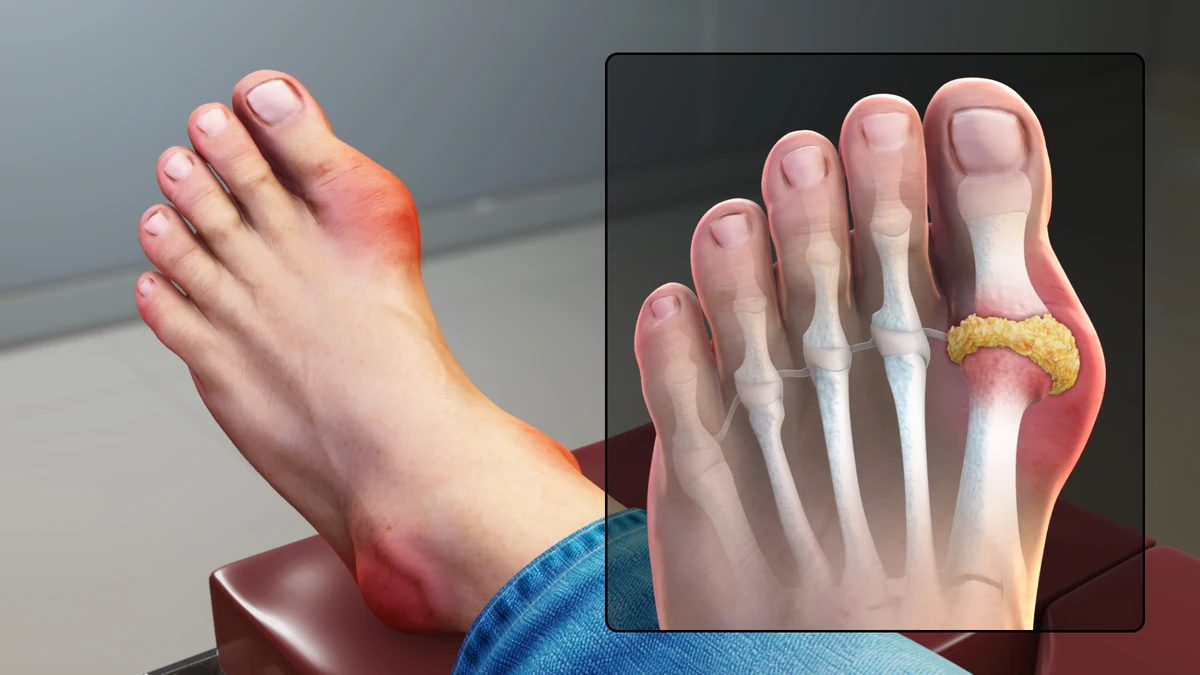
Gout is an inflammatory arthritis associated with urate crystals in and around joints. Gout symptoms during a flare can include rapid-onset pain, warmth, swelling and marked tenderness. The big toe is often affected, but ankles, knees, hands and other joints can also be involved. [1] [3]
Between attacks, a joint may feel normal while urate remains raised. Repeated or longstanding gout can lead to persistent joint problems, lumps of crystals called tophi, or kidney stones. However, a raised uric acid blood test alone does not mean that a person has gout. [1]
Why can gout return after the pain disappears?
A flare is an episode of inflammation around urate crystals. The joint can feel normal between attacks even though the underlying problem remains. This is why treatment that settles pain and swelling does not necessarily prevent another episode. Repeated attacks, tophi and other features may make long-term urate-lowering treatment appropriate. [1] [2]
Keep a record of how often attacks happen, the affected joints and the effect on walking, sleep or work. This helps the treatment discussion more than remembering only the worst attack. If you already take urate-lowering medicine, ask about the target and monitoring schedule; it is generally taken regularly rather than only when a joint hurts. [2] [3]
Does a raised uric acid blood test mean I have gout?
Not by itself. The result needs to be interpreted with the symptoms, examination and sometimes joint-fluid testing or imaging. Equally, a result that is not high during a painful episode does not always exclude gout: urate can fall during an attack. Your doctor may arrange a repeat test once the flare has settled. [1] [2]
The other important question is whether the joint could be infected. Do not label every new hot, swollen joint as familiar gout, particularly if you have fever, chills or feel generally unwell. Seek urgent assessment in that situation. It also matters which pain treatments are safe, because kidney disease, heart conditions and other medicines can affect the choice. [2] [3]
Flare care and prevention: two parts of the plan
Ask your clinician which part each prescribed medicine belongs to.
| Part of care | Main question |
|---|---|
| Treating an acute flare | What should I take promptly, and is it safe with my other conditions? [2] |
| Long-term urate management | Do I need regular treatment and what urate target will we monitor? [2] |
| Lifestyle and follow-up | Which sustainable changes and review dates support the treatment plan? [2] [3] |
A new swollen joint with fever or feeling unwell needs urgent assessment; it should not be managed solely using a past flare prescription.
Gout assessment and uric acid tests
Your doctor asks about the attack, examines the joint and checks urate levels. Levels can fall during a flare, so a test may need repeating after symptoms settle. Joint-fluid testing for crystals or imaging may help when the diagnosis is uncertain. Other causes, including infection, need consideration. [2]
Gout flare treatment and pain relief
A doctor may prescribe an anti-inflammatory medicine, colchicine or a corticosteroid. The choice depends on kidney function, other conditions and medicines. Do not assume that an over-the-counter painkiller is safe for you, particularly if you have kidney or cardiovascular disease. [2]
Rest and raise the affected limb, avoid pressure on the joint and use a cold pack wrapped in a towel for comfort. Follow the treatment plan promptly. Arrange review if a first attack has not been assessed or your usual prescribed treatment is not helping. [3]
Urate-lowering treatment and preventing future flares
Long-term urate-lowering treatment may be offered for troublesome or repeated flares, tophi, chronic gouty arthritis or certain other risks. Blood tests guide treatment towards an agreed urate target, with continuing monitoring. This treatment is usually long term, rather than taken only when pain occurs. [2]
Take urate-lowering medicine regularly as prescribed even when you have no symptoms. Gout may return after a long symptom-free interval, and untreated attacks can become more frequent. Feeling better between attacks is therefore a reason to continue your agreed plan and discuss any concerns at review. [3]
Choose a balanced diet, avoid excessive alcohol and work towards a healthy weight if needed. Evidence is insufficient to recommend a specific diet as a reliable way to prevent flares or lower urate. Dietary changes should support, rather than replace, indicated medical treatment. [2]
When to seek help
A suddenly painful, swollen joint with fever, chills, feeling sick or worsening pain needs urgent medical assessment. Joint infection can resemble gout and needs prompt treatment. Do not assume a new episode is another routine flare. [3]
For a life-threatening emergency in Singapore, call 995. MOH emergency information.
Frequently asked questions
Can gout affect joints other than the big toe?
Yes. Although the big toe is a common site, gout can affect the ankles, knees, hands and other joints. The site alone does not confirm the diagnosis. A first attack or an unusual episode needs assessment to distinguish gout from infection and other causes of joint inflammation. [1] [2]
Can diet changes cure gout without medicine?
Healthy eating, avoiding excessive alcohol and weight management where appropriate can support care. However, evidence does not establish one specific diet as a reliable way to prevent flares or lower urate sufficiently. If urate-lowering treatment is indicated, dietary changes should complement the prescription rather than replace it. [2]
Do I need review when I have no joint pain?
Yes, if you are being monitored or treated for gout. A symptom-free interval does not show that urate is at the agreed target. Follow-up can review flare frequency, blood results, medicine tolerability and the prevention plan. Bring concerns about treatment rather than stopping a long-term prescription yourself. [2] [3]
What can I ask at my appointment?
- Has gout been confirmed, and do I need a repeat blood test or joint-fluid test?
- Would urate-lowering treatment help me, and how will its response and safety be monitored?
Sources and evidence
Numbered references connect the information above to these clinical guidelines and patient resources. Access dates are listed with each source.
- Gout – Causes, Symptoms, Preventions, TreatmentsSingapore General Hospital / SingHealth · accessed 19 November 2026
- Gout: diagnosis and management (NG219)National Institute for Health and Care Excellence · accessed 19 November 2026
- GoutNHS · accessed 19 November 2026