General health information. Your doctor can help interpret it for your circumstances.
The walk to the bus stop takes longer, stairs need a pause, or a cough becomes part of every morning. Gradual changes are easy to work around, but they are useful clues to bring to a breathing assessment.
COPD symptoms: breathlessness and persistent cough
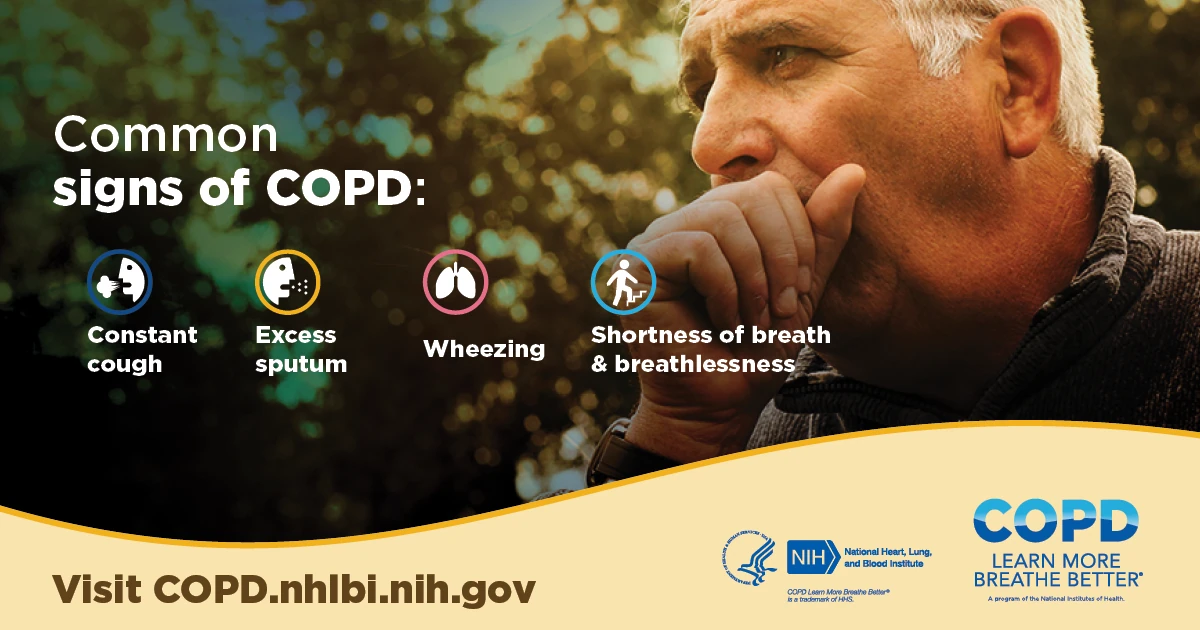
Chronic obstructive pulmonary disease, or COPD, is a long-term lung condition involving damaged airways or air sacs and restricted airflow. COPD symptoms may include breathlessness, a persistent cough with or without phlegm, wheezing and tiredness. Symptoms usually develop gradually and may make everyday activities increasingly difficult. Smoking is a major cause, but other exposures and early-life lung problems can also contribute. [1]
Is getting breathless just part of getting older?
Age does not explain every change in breathing. COPD may develop slowly, so people sometimes shorten walks or stop climbing stairs before realising how much their activity has changed. A useful account includes what you could do before, what stops you now, and whether there is cough, phlegm or wheeze. Tell your clinician about smoking, second-hand smoke and work-related dust or fumes. Those details help decide which investigations are appropriate. Spirometry is interpreted with the whole clinical picture because asthma, heart disease and other lung conditions can also cause breathlessness. [2]
What helps beyond a prescription for an inhaler?
COPD care aims to preserve the things you need to do each day. Stopping smoking, avoiding smoke exposure and staying active within your capabilities are part of the plan. Pulmonary rehabilitation offers supervised exercise training together with education and support; ask whether referral is suitable. Vaccination advice may help reduce the risk of respiratory infections. It is also worth discussing appetite, weight and the anxiety that can accompany breathlessness. These needs can change over time, so a useful review considers daily function as well as the inhaler prescription. [1]
Notice a change from your usual COPD pattern
Compare symptoms with your own normal day, not someone else’s walking speed.
| Change | What to do |
|---|---|
| Breathlessness or phlegm is worse than usual | Contact your clinician promptly and follow your agreed flare-up instructions. [3] |
| More flare-ups or activity becoming harder | Arrange a review of treatment, inhaler technique and support needs. [2] |
| Severe breathing difficulty, confusion or blue-grey lips | Seek emergency help. Do not wait for a routine appointment. [3] |
Antibiotics, steroid tablets and rescue packs should follow an individual clinical plan; they are not needed for every change in symptoms.
COPD diagnosis and spirometry
Tell your doctor about smoking, workplace dust or fumes, previous lung infections and changes in your ability to walk or climb stairs. Diagnosis requires relevant symptoms and risk factors together with persistent airflow obstruction on spirometry after an airway-opening medicine. Asthma and COPD can share symptoms and can occur together; uncertainty may require specialist assessment. [2]
COPD treatment, inhalers and pulmonary rehabilitation
Inhaled bronchodilators, which open the airways, are central to COPD treatment. The choice of one or more medicines depends on symptoms and previous flare-ups. Inhaled corticosteroids are added for selected people, such as those with particular flare-up patterns or features of asthma. They are not automatically needed by everyone with COPD. [2]
Stopping smoking and avoiding second-hand smoke and air pollution are important parts of care. Discuss recommended respiratory vaccinations and activity that suits your abilities. Pulmonary rehabilitation combines exercise training with education and support; ask whether a referral would be appropriate for your symptoms and daily limitations. [1]
Preparing for a COPD review
Bring your inhalers and record changes in walking distance, breathlessness and the number of flare-ups or hospital visits. Reviews should check inhaler technique and medicine use as well as symptoms and future flare-up risk. Mention weight loss, appetite problems and other conditions that may affect your breathing or treatment choices. [2]
Recognising a COPD flare-up
Seek prompt medical advice if you become more breathless than usual. Agree beforehand how to recognise a flare-up and whom to contact. A clinician may select steroid tablets or antibiotics for some episodes; these are not needed for every change in symptoms. Use a home rescue pack only under the specific instructions provided for you. [3]
Tell your clinician if COPD is affecting your mood or confidence about activity. Support for the emotional effects of breathlessness can be part of your care alongside lung treatment. [3]
When to seek help
Seek emergency help for severe difficulty breathing, inability to speak because of breathlessness, blue or grey lips, sudden confusion, or a tight or heavy chest. Do not drive yourself. Coughing up blood also needs urgent medical assessment, even if you think it is part of COPD. [3]
For a life-threatening emergency in Singapore, call 995. MOH emergency information.
Frequently asked questions
Can someone who has never smoked get COPD?
Yes. Smoking is a major cause, but other exposures and problems affecting lung development or earlier lung health can contribute. A clinician considers those risks together with symptoms and breathing tests. Breathlessness in a non-smoker still deserves assessment rather than being dismissed or assumed to be COPD. [1]
Are COPD and asthma the same condition?
No. They can cause similar symptoms and may occur together, but the pattern of airflow limitation and treatment decisions differ. COPD diagnosis requires persistent obstruction on spirometry in the right clinical context. If the diagnosis is uncertain, further assessment or specialist advice may be needed. [2]
Does every COPD flare-up need antibiotics?
No. Treatment depends on the symptoms and the clinician’s assessment. Some flare-ups need antibiotics or steroid tablets, while others need a different approach. If you have a prescribed rescue pack, use it only according to the instructions agreed for you and let your care team know about the episode. [3]
What can I ask at my appointment?
- What did my spirometry show, and is there any uncertainty about the diagnosis?
- What is my written plan for a flare-up, and would pulmonary rehabilitation help me?
Sources and evidence
Numbered references connect the information above to these clinical guidelines and patient resources. Access dates are listed with each source.
- Chronic obstructive pulmonary disease (COPD)World Health Organization · accessed 19 November 2026
- Chronic obstructive pulmonary disease – diagnosis and managementAgency for Care Effectiveness, Ministry of Health Singapore · accessed 19 November 2026
- Chronic obstructive pulmonary disease (COPD)NHS · accessed 19 November 2026