General health information. Your doctor can help interpret it for your circumstances.
Scalp flakes show on a work shirt, a patch on your hand cracks during washing, or a small rash affects what you feel comfortable wearing. The impact of psoriasis is not measured only by the amount of skin involved.
Psoriasis symptoms: skin, scalp and nails
Psoriasis is a long-term inflammatory skin condition in which skin cells are produced and replaced too quickly. It can run in families, with environmental factors contributing to flare-ups. It is not contagious: touching someone, sharing a meal or swimming in the same pool will not pass it on. [1]
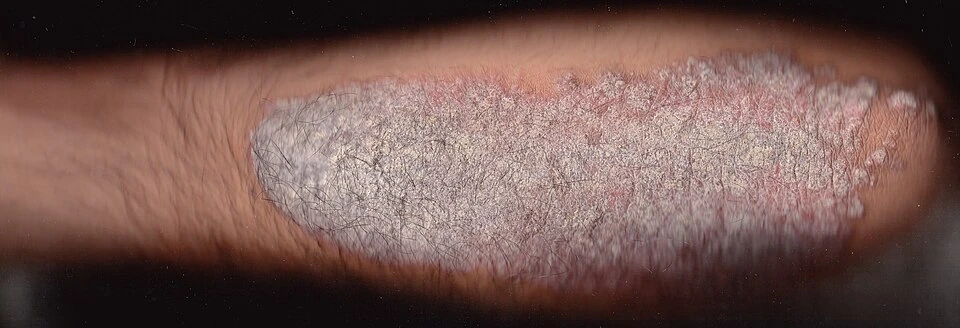
Psoriasis symptoms commonly include itchy or sore, dry, scaly patches. They may look pink or red on lighter skin and grey on brown or black skin. The scalp, elbows and knees are common sites, but other areas can be affected. Nails may develop pits, and symptoms can improve and flare again. [3]
Why does treatment differ between my scalp and other patches?
Psoriasis can occur on several body sites and may affect the nails as well. Its appearance and treatment needs vary, so it helps to show every troublesome area rather than only the largest patch. Tell your clinician if washing, dressing or applying treatment is difficult. A practical plan should make clear which product goes where and how it is used. Some people need only skin treatments; more extensive or difficult disease may need specialist options and monitoring. A previous prescription should not be copied to a new site without checking that it is suitable. [2]
Can I stop psoriasis spreading by avoiding contact with people?
Psoriasis is not an infection that spreads between people. Touching, eating together and using the same swimming pool will not pass it on. The condition can run in families, and flares may be associated with factors such as stress, skin injury, infections or medicines. Keeping the skin moisturised and reducing scratching or friction can support comfort, but a flare does not mean you have failed to look after yourself. If you suspect a prescribed medicine is involved, discuss it rather than stopping on your own. Dietary restrictions should not replace an effective treatment plan. [1]
Look beyond the size of a psoriasis patch
These details help explain what treatment needs to improve.
| Area to discuss | Useful detail |
|---|---|
| Skin and scalp | Which sites itch, crack or make treatment difficult. [2] |
| Nails and joints | Nail changes or recurring joint pain, stiffness and swelling. [2] |
| Daily life and mood | Sleep, confidence, relationships or activities affected. [3] |
| Current treatment | What helps, what causes side effects and any monitoring due. [2] |
Rapid widespread redness with pus-filled bumps or feeling very unwell needs emergency assessment.
Psoriasis diagnosis and assessment
A doctor usually diagnoses psoriasis from its appearance. Sometimes a small skin sample is needed when the diagnosis is unclear. Describe where the rash occurs, how long it has been present and anything that seems to worsen it. Skin injury, stress, infections and some medicines may trigger flares. [1]
Psoriasis treatment and follow-up
Treatment depends on the type, location and severity of psoriasis. Moisturisers and prescribed skin treatments, such as steroid or vitamin D preparations, may help. More extensive or difficult-to-control disease may need supervised light treatment or medicines that work throughout the body, including biological treatments selected by a specialist. [2]
Follow-up helps check whether the treatment is controlling symptoms and causing unwanted effects. Some treatments require regular blood tests and closer monitoring. Ask exactly where to apply each skin preparation and how to use it. Tell the clinician if the plan is difficult to follow or has not helped. [2]
Psoriatic arthritis and wider health
Psoriasis can also affect joints. Report recurrent joint pain, stiffness or swelling so possible psoriatic arthritis can be assessed. Psoriasis is associated with a higher risk of conditions including obesity, high blood pressure, diabetes and high cholesterol, so wider health checks may be part of care. [2]
Living with psoriasis can affect confidence, relationships and mental health. Mention these effects at appointments, even if the visible rash seems small. Support for emotional well-being can form part of treatment, and a clinician may discuss additional mental health support when needed. [3]
Moisturising regularly and reducing scratching, friction and skin injury can help day-to-day comfort. Discuss suspected triggers before making changes to prescribed medicines. Keep a balanced diet and talk through realistic ways to look after general health. Treatment and follow-up can be adjusted as symptoms and priorities change. [1]
When to seek help
Rapidly reddening skin with pus-filled bumps needs emergency assessment. Seek emergency care now, especially if you also have fever, shivering or a racing heartbeat. These changes can signal a serious condition or infection. Redness can be harder to see on brown or black skin. [3]
For a life-threatening emergency in Singapore, call 995. MOH emergency information.
Frequently asked questions
Is psoriasis contagious?
No. Psoriasis cannot be passed on through skin contact, sharing meals or swimming in the same pool. It is a chronic inflammatory condition rather than a contagious infection. If a rash has not been diagnosed, however, an examination is needed instead of assuming every scaly patch is psoriasis. [1]
Should I mention joint stiffness if my skin is improving?
Yes. Recurrent pain, stiffness or swelling in the joints can need assessment for psoriatic arthritis even when skin symptoms are less troublesome. Describe which joints are affected and whether symptoms keep returning. Joint symptoms should be considered as part of care rather than left until the next skin flare. [3]
Can a small area of psoriasis still need a review?
Yes. The location and effect on everyday life matter as well as the extent. Seek a review if the diagnosis is uncertain, treatment is not helping or side effects occur. Mention sleep, confidence or emotional difficulties too, since these can be significant even when the visible area is small. [3]
What can I ask at my appointment?
- Which treatment is suitable for each affected area, and what monitoring will it need?
- Do my joint symptoms or the effect on my mood need further assessment?
Sources and evidence
Numbered references connect the information above to these clinical guidelines and patient resources. Access dates are listed with each source.
- Psoriasis: Causes, Types and TreatmentDermatological Society of Singapore · accessed 19 November 2026
- PsoriasisSingHealth · accessed 19 November 2026
- PsoriasisNHS · accessed 19 November 2026