General health information. Your doctor can help interpret it for your circumstances.
You plan an outing around toilet stops, wait for the urine stream to start, or wake repeatedly at night. These symptoms are worth discussing even if you have assumed they are simply part of getting older.
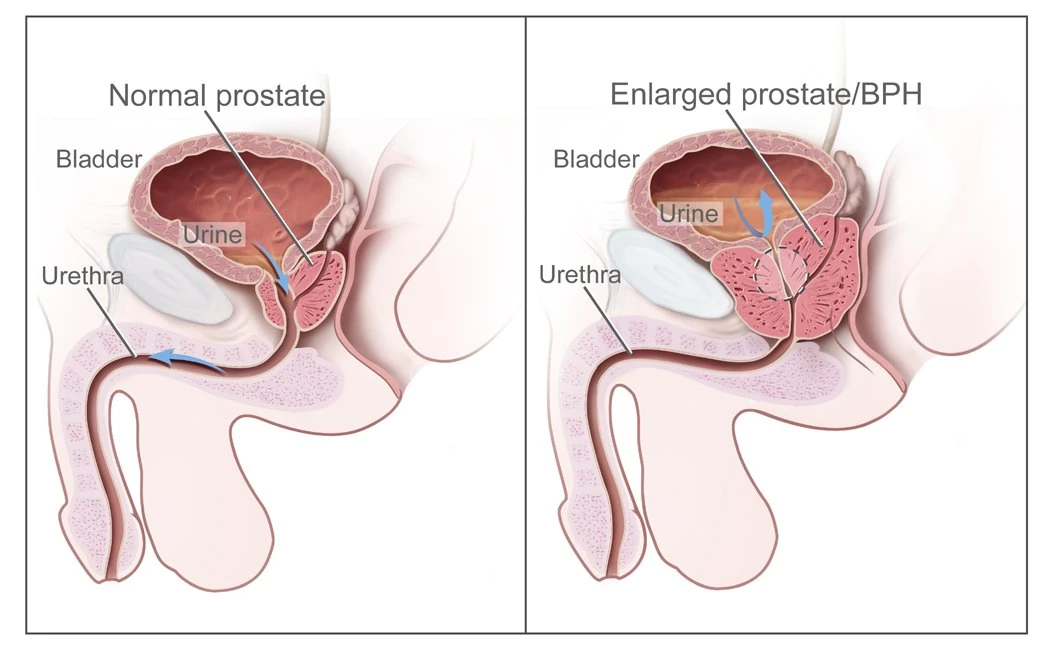
Enlarged prostate symptoms and urine flow
Benign prostatic hyperplasia, or BPH, is non-cancerous prostate enlargement that becomes more common with age. The prostate surrounds the urine passage, so enlargement may obstruct flow. Some people have few symptoms; others notice difficulty passing urine or a feeling that the bladder has not emptied. [1]
Symptoms associated with an enlarged prostate can include a weak or interrupted stream, difficulty starting, straining, dribbling, urgency and frequent night-time trips to the toilet. These symptoms do not confirm BPH. Infection, stones, an overactive bladder and prostate or bladder cancer can cause similar problems, so arrange a medical assessment rather than assuming the cause. [1]
Does a weak urine stream mean prostate cancer?
A weak stream alone cannot tell you the cause. Benign enlargement can obstruct the urine passage, but infections, stones, bladder conditions and cancers can produce overlapping symptoms. Tell your clinician about the whole pattern: starting difficulty, urgency, night waking, dribbling and any feeling of incomplete emptying. Examination and urine tests may be followed by other investigations depending on the findings. If a PSA blood test is discussed, ask what it can and cannot tell you and how the result would affect the next step. The aim is an assessment, not a diagnosis from one symptom. [1]
How do I decide whether treatment is worth it?
Start with the effect on your life. Mild symptoms may be managed with agreed monitoring, while disrupted sleep or repeated difficulty emptying the bladder can change the balance. Medicines act in different ways: some relax muscle at the bladder outlet and others reduce prostate size over time. A useful discussion includes likely benefit, how soon to expect it and possible dizziness or sexual side effects. If a procedure is considered, ask about urinary outcomes, recovery and sexual effects. Your priorities belong in the decision alongside prostate findings and any complications. [3]
A short urinary symptom record
Bring a clear description rather than trying to remember every toilet trip at the appointment.
| Record | Why it matters |
|---|---|
| Night waking, urgency and stream changes | Shows the symptom pattern and its impact. [1] |
| Drink timing, caffeine and alcohol | Helps discuss practical changes when appropriate. [2] |
| Prescription and pharmacy medicines | Some medicines can worsen urinary symptoms. [2] |
| Pain, blood, fever or inability to pass urine | These changes can require urgent assessment. [2] [4] |
Do not severely restrict fluids or stop prescribed medicines without advice; other health conditions may affect what is suitable.
BPH assessment, urine tests and prostate checks
Your doctor may examine the prostate through the rectum and request urine testing for infection. Depending on the findings, urine-flow testing, ultrasound or a PSA blood test may be discussed. Ask what each test can show and how its result would change the next steps. [1]
BPH treatment: monitoring, medicines and procedures
If symptoms are mild and not affecting quality of life, monitoring with agreed reviews may be appropriate. Measures such as reducing caffeine and alcohol and adjusting the timing of drinks before bed may help. Discuss fluid advice if you also have another condition affecting your intake, and tell your clinician about all medicines you take. [2]
Medicines may relax muscles around the prostate and bladder outlet, or gradually reduce prostate size. Some can cause dizziness or changes in ejaculation, libido or erections. Discuss these effects and your priorities before choosing treatment. Do not assume that every medicine acts at the same speed or suits every person. [3]
A urologist may discuss a procedure when symptoms remain troublesome, medicines are unsuitable or complications develop. Options depend on the prostate and the nature of the obstruction, as well as your health and preferences. Ask about likely benefits, recovery, urinary effects and sexual side effects before deciding. [3]
Monitoring urinary symptoms and treatment effects
Record how often you pass urine, night waking and changes in the stream, and bring your medicine list. Report side effects or worsening symptoms between reviews. Some cold remedies, including decongestants and antihistamines, can worsen urinary symptoms; check with a pharmacist or doctor before using them. Monitoring should continue even if symptoms initially seem manageable. [2]
When to seek help
A sudden inability to pass urine, especially with lower abdominal pain or swelling, needs emergency assessment: this may be acute urinary retention. Do not wait for a routine appointment. Blood in the urine, or painful frequent urination with fever or chills, also needs urgent medical attention. [4] [2]
For a life-threatening emergency in Singapore, call 995. MOH emergency information.
Frequently asked questions
Does an enlarged prostate mean I have cancer?
BPH is non-cancerous enlargement. However, symptoms attributed to BPH can overlap with those of other conditions, including prostate or bladder cancer. Having a benign explanation in the past should not replace assessment of a new or changing symptom. Your clinician can discuss which checks are appropriate. [1]
Can pharmacy cold medicines affect urination?
Some can. Decongestants and antihistamines may worsen urinary symptoms in people with BPH. Check with a pharmacist or clinician before using them and bring a list of prescription, over-the-counter and other products to your review. Do not assume a medicine is suitable simply because it is available without a prescription. [2]
What if I suddenly cannot pass urine?
Seek emergency assessment, especially if there is lower abdominal pain or swelling. Acute urinary retention is different from a gradually weak stream and should not wait for a routine appointment. A clinician needs to assess and treat the blockage rather than waiting for it to resolve at home. [4]
What can I ask at my appointment?
- Could another condition be causing my urinary symptoms, and which tests would help?
- What are the benefits and possible urinary or sexual side effects of my treatment options?
Sources and evidence
Numbered references connect the information above to these clinical guidelines and patient resources. Access dates are listed with each source.
- Benign Prostatic HyperplasiaNational University Hospital Singapore · accessed 19 November 2026
- Enlarged Prostate (Benign Prostatic Hyperplasia)National Institute of Diabetes and Digestive and Kidney Diseases, NIH · accessed 19 November 2026
- Benign Prostatic Hyperplasia (BPH): Symptoms & TreatmentsSingHealth · accessed 19 November 2026
- Symptoms & Causes of Urinary RetentionNational Institute of Diabetes and Digestive and Kidney Diseases, NIH · accessed 19 November 2026