
General health information. Your doctor can help interpret it for your circumstances.
HealthOne Medical Clinic (Eastwood) offers in-clinic IV drips for rehydration in selected cases, bringing assessment and suitable treatment together in one convenient location. If diarrhoea or vomiting is making it difficult to keep up with fluid losses, a doctor can assess the right next step for you.
What should I drink first?
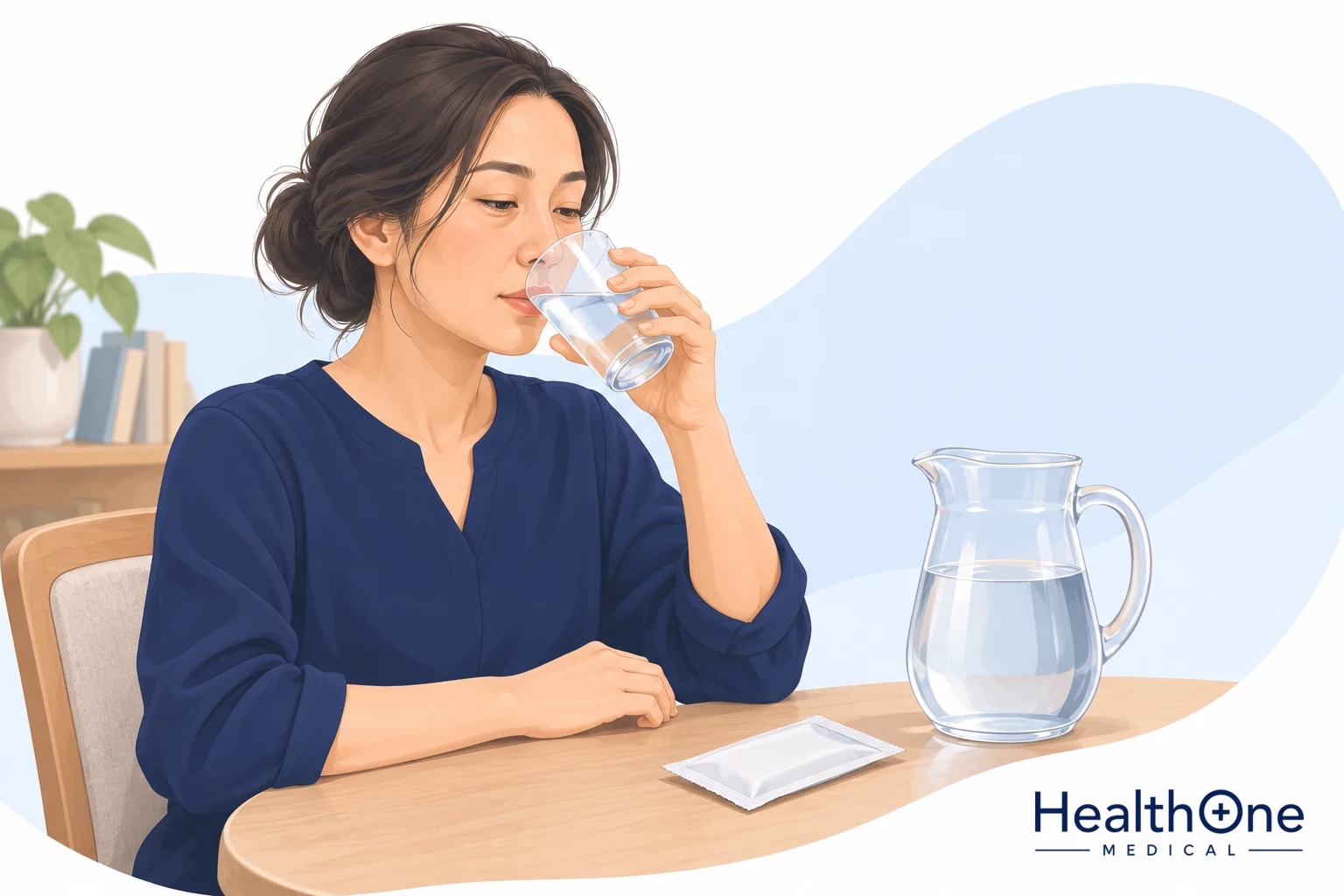
Oral rehydration is usually the first step for mild to moderate dehydration when you can drink. A drip is not automatically needed. [3]
Use oral rehydration salts according to the packet or pharmacist’s instructions, including the specified amount of water. Do not guess the mixing volume. Ask for advice if vomiting continues or you are passing less urine. [4]
If you have diabetes, kidney disease, a weakened immune system or are an older adult, ask your doctor about the appropriate fluid and amount. Your usual fluid advice may need adapting during illness. [5]
Does diarrhoea after a meal prove food poisoning?
No. Infection from contaminated food is one possibility, but diarrhoea may also follow contact with an infected person, food intolerance or medicines. The timing alone does not establish the cause. Tell your doctor about the whole pattern, including others who are ill. [2] [8]
Home care, GP or emergency department?
Use the whole picture. Worsening symptoms or difficulty replacing fluids should prompt earlier assessment.
| Situation | Next step |
|---|---|
| Mild symptoms; drinking, passing urine and improving | Continue fluids and eat as tolerated. Ask a pharmacist for help choosing and using oral rehydration salts. [5] [4] |
| Not improving after 48 hours, worsening, or vomiting affects drinking | Arrange a prompt GP review. Mention recent travel and any fever; seek help earlier if you are vulnerable to dehydration. [7] [5] |
| Severe pain, bleeding, faintness/confusion or very little urine | Go to the emergency department. These signs can indicate severe dehydration or another serious problem. [1] [8] |
This guide is for adults. Children need age-specific advice; do not apply adult medication advice to a child.
What can I eat while recovering?
While actively vomiting, focus on fluids until vomiting settles. Once you can keep food down and your appetite returns, resume eating as tolerated; diarrhoea does not mean you must fast. [1] [6]
For example, try a small portion of plain porridge or toast if that feels manageable, then return towards your usual meals. A restrictive diet does not treat stomach flu. Coffee, alcohol, very sweet drinks, fried foods and milk may aggravate symptoms; leave out what makes you feel worse. [6] [1]
Can I get an IV drip at HealthOne?
IV rehydration delivers fluids directly into a vein. It can be helpful when vomiting or poor intake makes replacing fluid losses by drinking difficult. Your doctor assesses the cause of your symptoms, your hydration and whether treatment in clinic is appropriate. [3] [2]
Severe dehydration, confusion or shock needs emergency care. Bloody diarrhoea, high fever or an inability to keep fluids down can also require hospital treatment. Do not delay hospital assessment to arrange a clinic drip. [2] [3]
What should I tell my doctor?
Bring your medicine list and these details to help your doctor assess the problem. [3]
How can I protect others at home?
Wash your hands thoroughly with soap and water after using the toilet and before eating. Avoid preparing food while unwell, do not share cups or utensils, and clean shared bathroom and kitchen surfaces. These steps matter because gastroenteritis can spread through people and contaminated surfaces as well as food. [2]
When to seek help
Go to an emergency department for severe abdominal pain, blood in vomit, bloody or black sticky stools, or severe dehydration. Feeling faint or confused, passing little or no urine, or marked weakness are warning signs. Do not wait for a routine clinic appointment. [1] [8]
For a life-threatening emergency in Singapore, call 995. MOH emergency information.
Frequently asked questions
Can I take loperamide to stop the diarrhoea?
It may help some otherwise healthy adults with watery diarrhoea, but it does not replace rehydration. Avoid self-treating with it if you have fever or bloody stools; ask a pharmacist or doctor about suitability. [3] [5]
Do I need antibiotics for food poisoning?
Usually not. Many cases improve with rehydration and supportive care. Antibiotics are reserved for particular infections or clinical situations, so do not take leftover antibiotics simply because symptoms began after a meal. [2]
Will I need a stool test?
Not every episode needs one. Testing is more useful with fever, blood or mucus, severe abdominal tenderness, suspected outbreaks or particular risk factors. Recent antibiotics or hospital care can change which tests are considered. [3]
What can I ask at my appointment?
- Am I dehydrated, and is oral rehydration enough for me?
- Could my medicines or recent travel change the assessment?
- If IV fluids are appropriate, can I safely have them here, and when would I need hospital care?
Sources and evidence
Numbered references connect the information above to these clinical guidelines and patient resources. Access dates are listed with each source.
- Diarrhoea and VomitingMinistry of Health, Singapore · accessed 21 November 2026
- Food poisoning or gastroenteritisCommunicable Diseases Agency, Singapore · accessed 21 November 2026
- IDSA 2017 Clinical Practice Guidelines for Infectious Diarrhea — recommendations 8, 18, 36 and 39–47Infectious Diseases Society of America · accessed 21 November 2026
- Oral Rehydration SaltsHealthHub / National Medication Information workgroup · accessed 21 November 2026
- Treatment of DiarrheaNational Institute of Diabetes and Digestive and Kidney Diseases · accessed 21 November 2026
- Eating, Diet, & Nutrition for Viral GastroenteritisNational Institute of Diabetes and Digestive and Kidney Diseases · accessed 21 November 2026
- Diarrhoea: when to visit a GP or the emergency departmentSingHealth / GPFirst · accessed 21 November 2026
- DiarrhoeaHealthHub / National Medication Information workgroup · accessed 21 November 2026


